A strategy that ignores the obstacles is liable to fall at the first hurdle. That’s if it even gets that far – who will take seriously a strategy that ignores the issues? Turn those obstacles into outcomes Agendashift-style, and organise them so that you can establish a sense of direction, identify places to focus your efforts, and measure progress and success, well you’re in much better shape.
Most things Agendashift-related come with leadership lessons too, hence Leading with Outcomes. Here, in a psychologically safe environment, it must be ok to talk about obstacles. As a leader, you have a responsibility to encourage that to happen. But we can take that basic lesson further: how we talk about obstacles matters too.
Ever since a workshop in Berlin in 2019*, we’ve paid closer attention to how obstacles are framed. What started out as an effort to debug one breakout group’s frustrating experience turned into a new exercise, Good Obstacle, Bad Obstacle (yes there’s a nod to Rumelt in the name there).
Ostensibly, the exercise’s job is to frame obstacles such that the conversations to turn them into outcomes will be productive and satisfying, even enjoyable. What we repeatedly find though is that it helps us get to deeper issues and at the same time puts a spotlight on the organisation’s discourse. A bugfix becomes a key feature!
The exercise’s goal is to produce obstacles that are real, relevant, and representative – describing things that colleagues would quickly recognise, that affect their everyday work, and worded as they might word them. As per the title of this post, the trick (if “trick” is the right word – it can take real effort) is to sell the pain, not the solution, the theory, or the blame.
Some examples of “bad” obstacles:
- Lack of a knowledge management system
- Lack of people, money, or time
- Lack of WIP limits
- Lack of the Agile mindset
- Lack of leadership
- Lack of quality
The problem isn’t the “lack of” language (or “scarcity language”, as I sometimes call it), though that’s a strong smell. The problem is what those obstacles are selling: solutions, theories, or blame (or a combination), all of which get in the way of agreement. They’re easily dismissed (they may exclude better solutions or theories, for example), they call for things that everyone knows are unlikely to be forthcoming, or people feel judged by them.
Instead of those “lack ofs”, tell the more interesting side of the story. Sell the pain. Identify the real issue. That way lies the path to agreement on outcomes, a more coherent and robust strategy, and a more purposeful innovation process. And if you want your organisation’s discourse to improve, try paying attention to how obstacles are articulated. The conversation to turn a bad obstacle into a good one (in your next retro, perhaps) might be more important than you might think.
*See Events below – I’ll be back in Berlin in February, my first trip outside the UK since Covid!
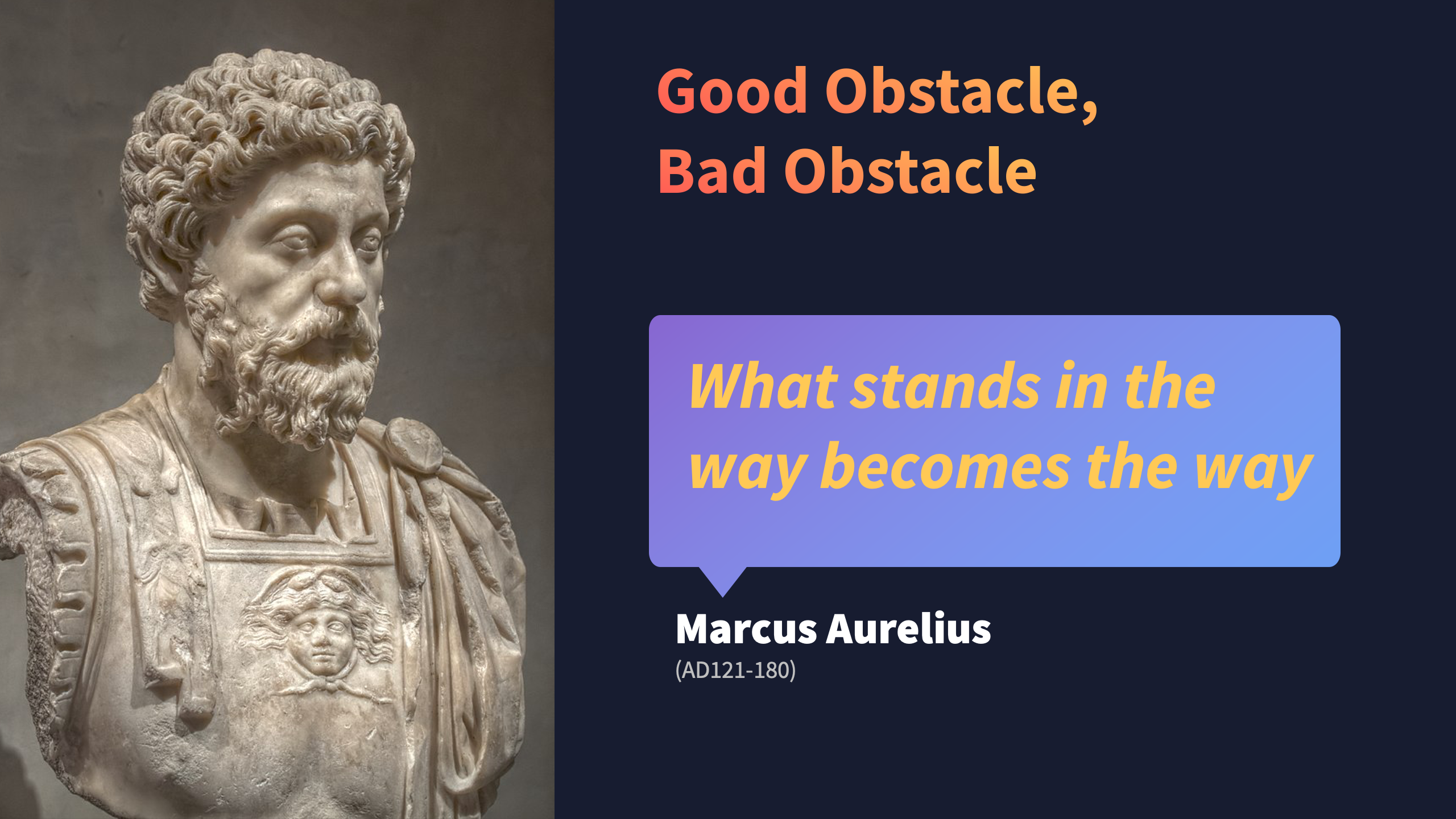
Image: anonymous, CC BY-SA 3.0, https://commons.wikimedia.org/w/index.php?curid=18101954
Thoughts? Discuss this post on LinkedIn
Upcoming events
February
- 18 February, Online, 16:00 GMT, 17:00 CET, 11am ET, Agile Strategy Meetup Group:
Meet Mike Burrows on strategy - 24-27 February, four 4-hour sessions online, afternoons UK time:
Leading with Outcomes: Train-the-Trainer / Facilitator (TTT/F)*
March
- 06 March, London, UK:
Kanban Edge 2025
*TTT/F and (where shown) LIKE events include free one-year membership of the Leading with Outcomes Authorised Facilitator programme, upgradeable to Authorised Trainer at any time. Both of those include access to the video-based Leading with Outcomes training and the full range of Agendashift assessment tools.
Leading with Outcomes from the Agendashift Academy
“Leadership and strategy in the transforming organisation”
Leading with Outcomes is our modular curriculum in leadership and organisation development. Each module is available as self-paced online training or as private, instructor-led training (online or in-person). Certificates of completion or participation according to format. Its modules in the recommended order:
- Foundation module:
- Inside-out Strategy:
- Adaptive Organisation:
- Outside-in Strategy:
Individual subscriptions from £24.50 £18.40 per month after a 7-day free trial, with discounts available for employees and employers in the government, healthcare, education, and non-profit sectors. For bulk subscriptions, ask for our Agendashift for Business brochure.
To deliver Leading with Outcomes training or workshops yourself, see our Authorised Trainer and Authorised Facilitator programmes. See our events calendar for Train-the-Trainer / Facilitator (TTT/F) and Leading in a Transforming Organisation trainings.
Agendashift™: Serving the transforming organisation
Links: Home | Subscribe | Events | Media | Contact | Mike
Agendashift Academy: Leading with Outcomes | Trainer and Facilitator Programmes | Store
At every scope and scale, developing strategy together, pursuing strategy together, outcomes before solutions, working backwards (“right to left”) from key moments of impact and learning.
 Agendashift