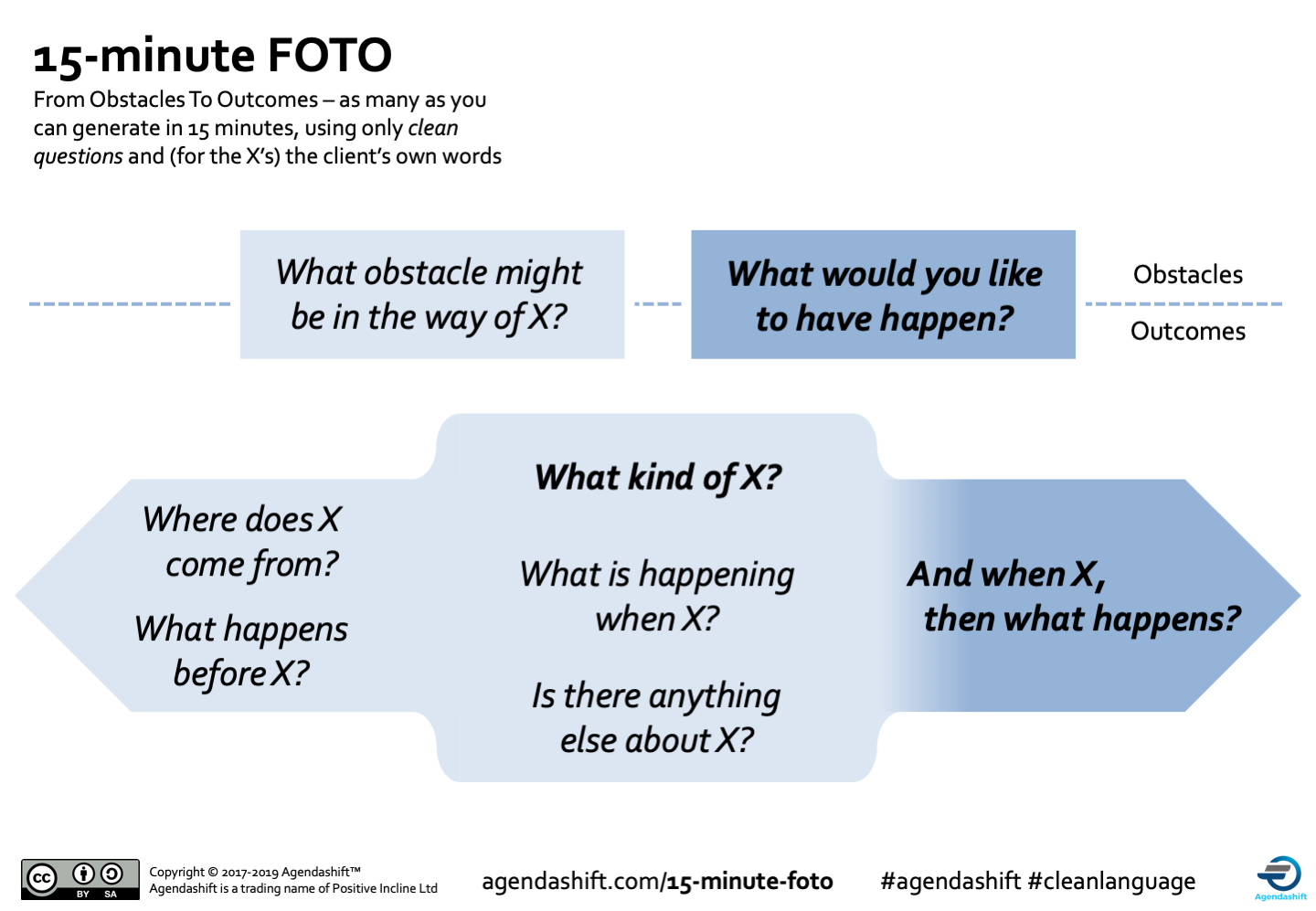
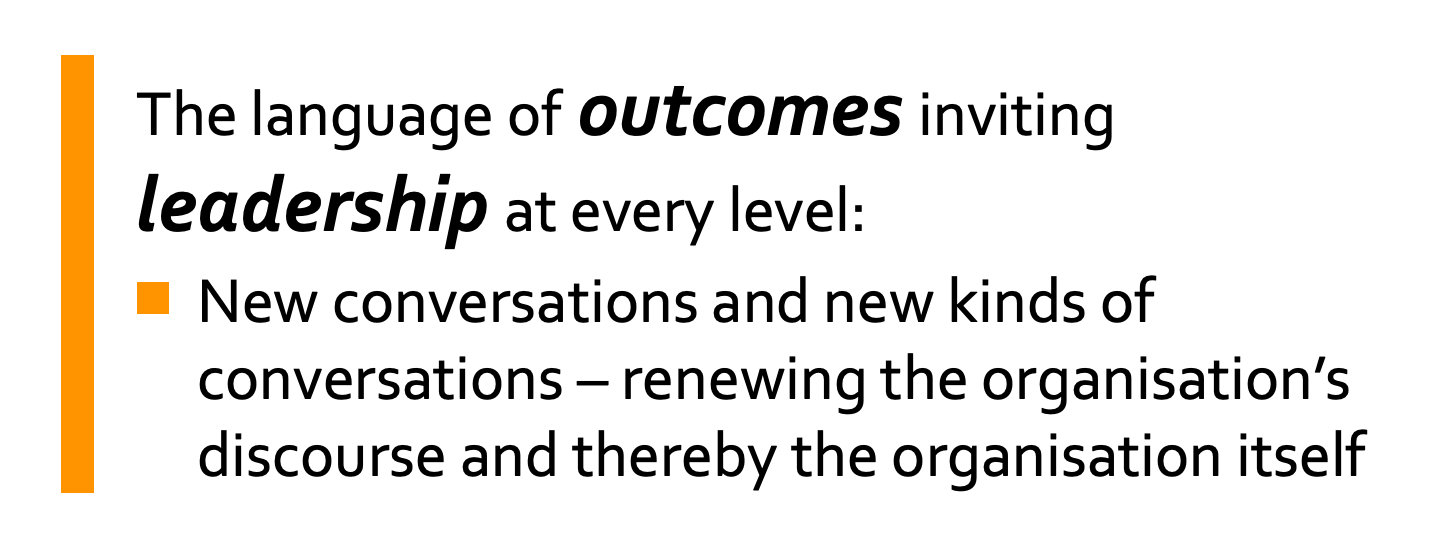
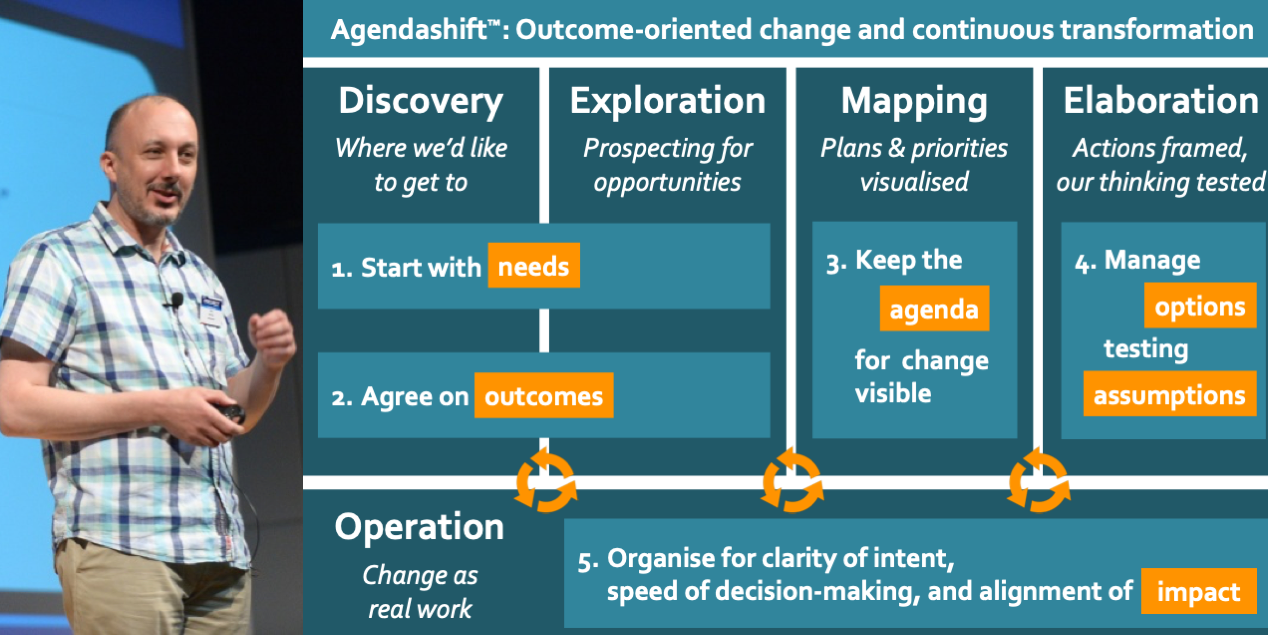
[Updated 2023-04-23: Improved the image (borrowed from the latest iteration of Leading with Outcomes: Foundation; minor changes to the text]
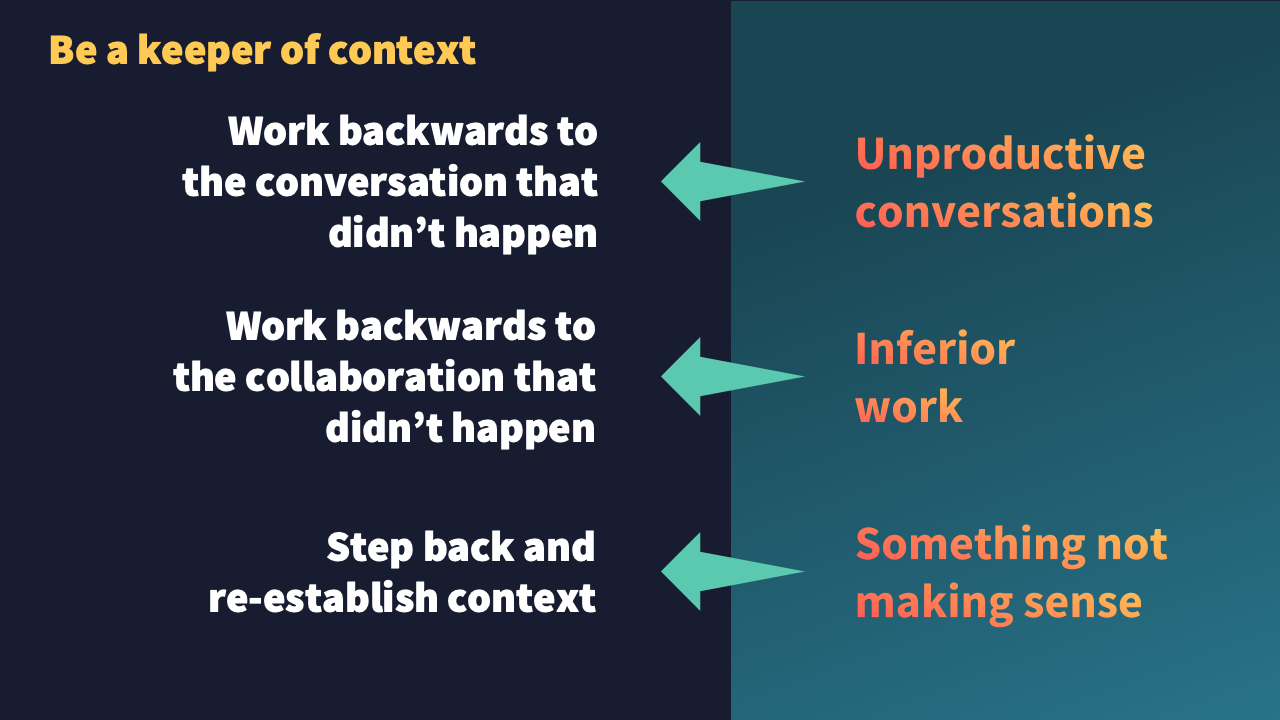
What if all failures were failures of context? OK, that’s an exaggeration, but as a working default assumption, it sure beats assuming failures of competence or character. Moreover, it can be the beginning of a generative line of thinking, one that puts you in the role of keeper of context.
Suppose that you’re a leader in a transforming organisation [1] and you witness an unproductive conversation. What is the shared context that this conversation is missing? You might intervene and provide some, but that’s not the point here. Work backwards. What was the conversation that didn’t take place, the one in which that context would have been established? Look not only at formal meetings but at how activities are sequenced, how their respective conversations happen, and their quality. What opportunities for context-creating conversations are we missing?
Looking at your organisation’s processes, it’s easy to focus on just the formal sequence of activities and overlook the interactions that happen (or need to happen) between them, and in particular, their conversations. When each activity involves different people and the chain of activities is long, it’s not hard to see how context gets lost.
Going deeper into organisation design and questions of meaningfulness, suppose now that you come across some work that failed to delight the customer. What went wrong? Lack of skill? Lack of commitment? These are easy conclusions to reach, but let’s try a different kind of assumption. Could this again be a failure of context? Was that work done with a deep enough appreciation of the context into which that work would be delivered? Where was the opportunity to appreciate the customer’s struggles? Where was the opportunity to explore their needs, to identify measures of customer progress, and so on? And suppose that the work had instead been successful, what kind of feedback would those involved have received? Could it be that our role definitions and process designs keep the people closest to the work insulated from the context they need?
Finally, suppose now that you suspect you’re seeing people lose their sense of what’s important, who they are, and what their team is about. Not so surprising in a transforming organisation! When you see confusion, it doesn’t usually help to ask what people are doing or what they are thinking. Instead, go back to the beginning and let them tell the story. If it turns out that the one who was confused was you, don’t be surprised. Context really is everything.
My perspective on these issues of context has evolved. In my first book, I suggested that you might begin with the assumption that any failures of process you encountered were rooted in failures of collaboration. If you’re looking for systemic causes – making it easier to adopt this perspective non-judgementally – I’ve found that this perspective can be highly productive.
Going back a few more years to when I was a global manager of managers, I would see failures of leadership. Confrontational perhaps, but again productive when the failing collaboration involved an imbalance of power or experience, and the more senior party involved needed to understand their additional responsibility in the relationship.
Failures of context, collaboration, or leadership: three closely related perspectives yet quite different in tone. When you’re a manager dealing with these issues daily or an external practitioner sensing one for the first time, which perspective do you choose? I remain comfortable with all three; the right one on the day is the one that leads to the insights needed via a safe and productive conversation. And if you’re not sure, you can always ask!
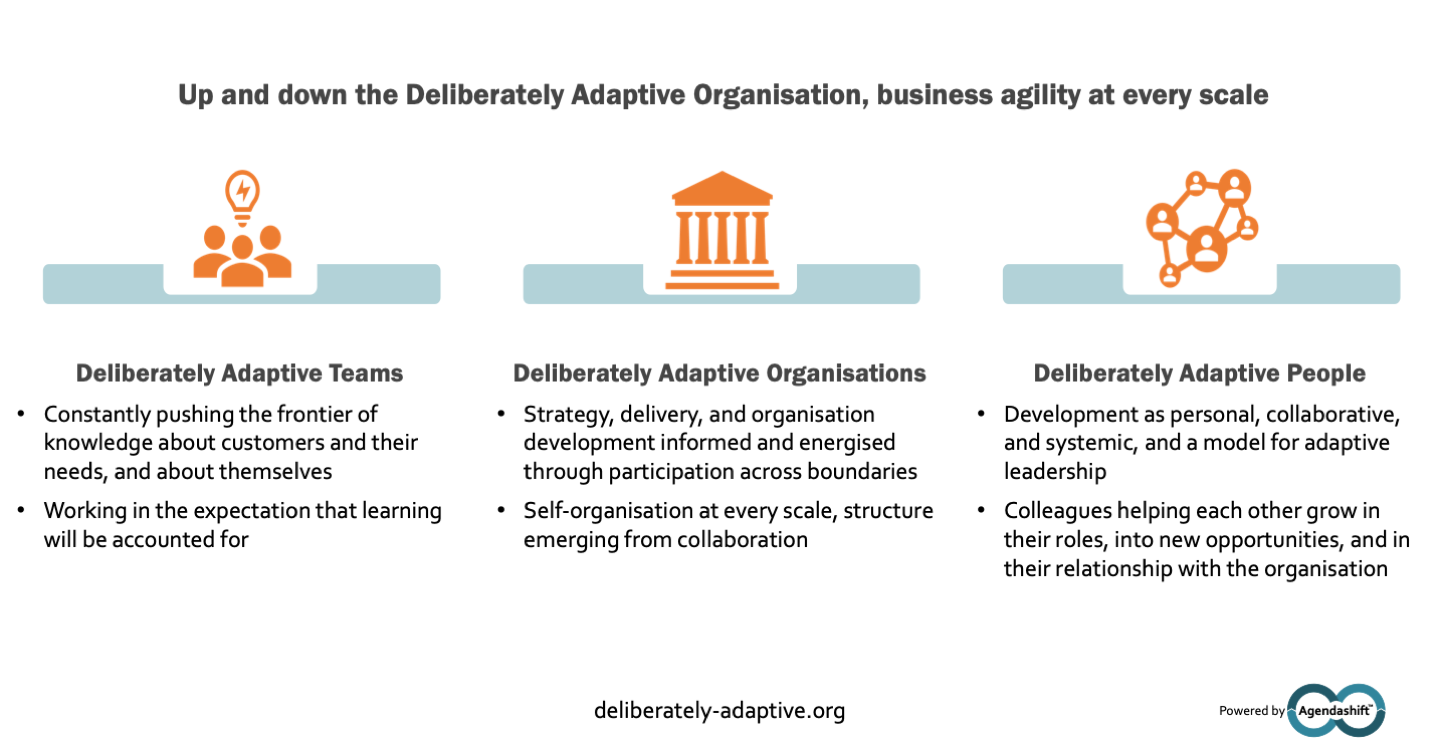
[1] Leaders in transforming organisations are the Agendashift Academy’s focus; this post expands on two end-of-section reflections from Leading with Outcomes: Foundation and Inside-out Strategy: Fit for maximum impact. We return to the topic as a sensemaking and scaling issue in the final module, Adaptive Strategy: Business agility at every scale.
Related
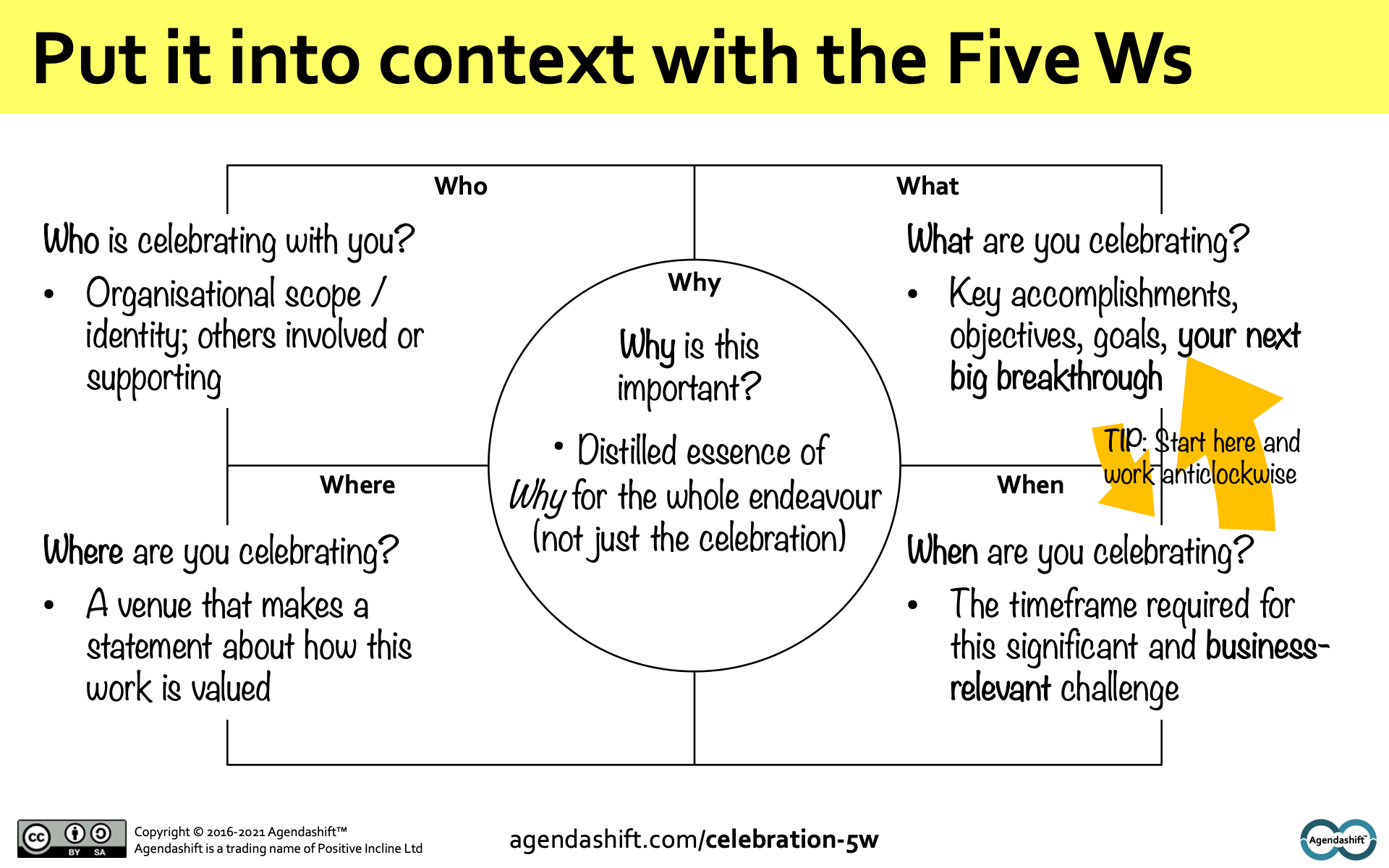
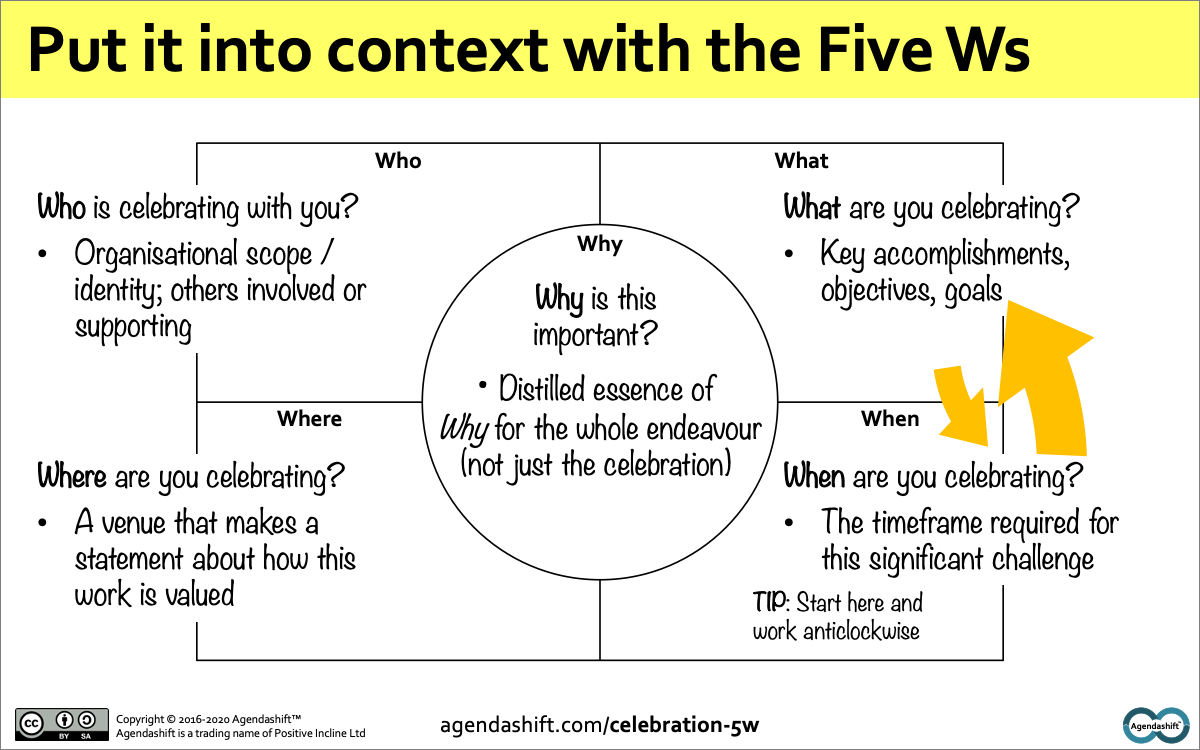
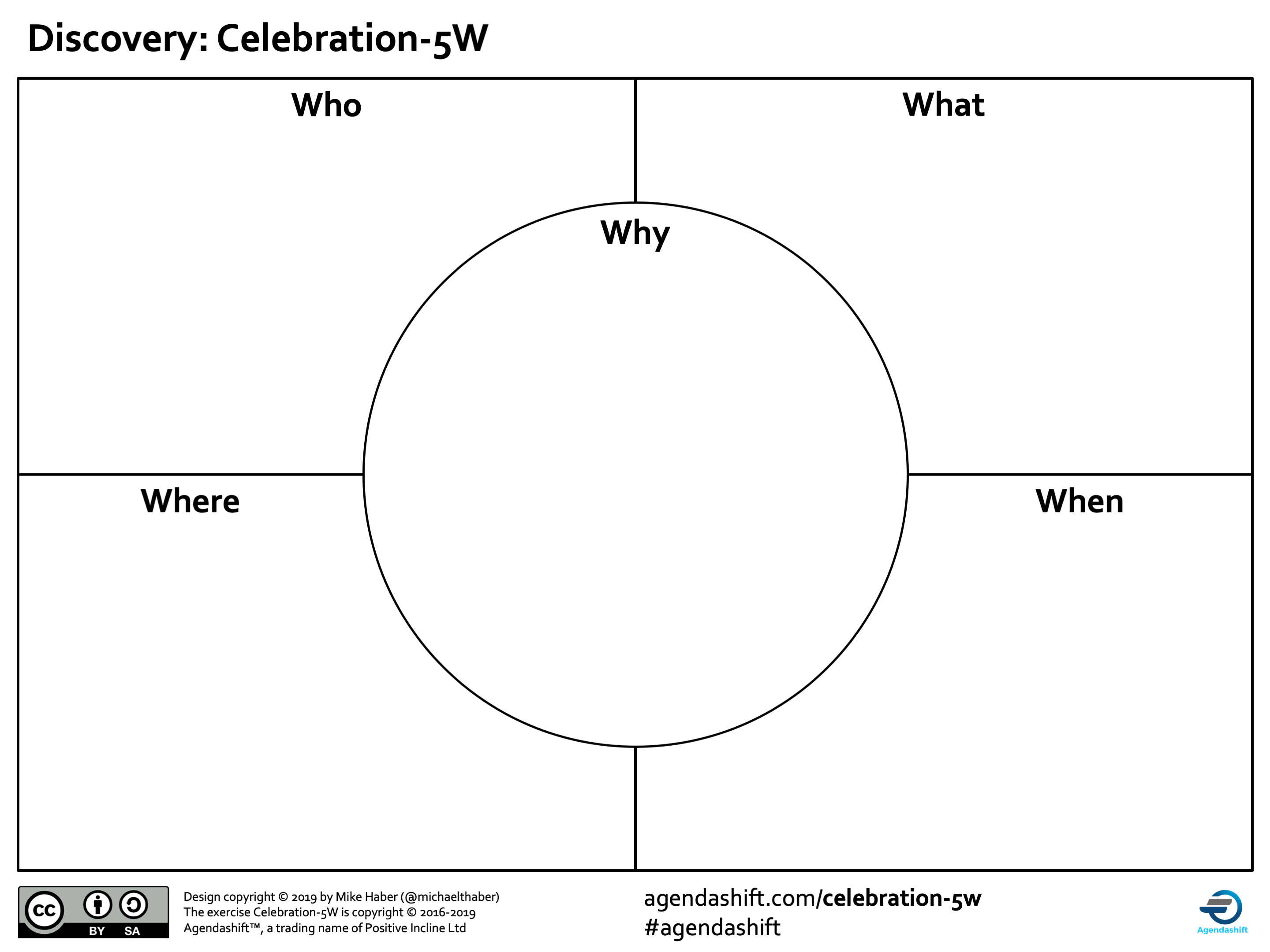
- Celebration-5W – our context-capturing workshop kickoff exercise
Upcoming events
February
- 18 February, Online, 16:00 GMT, 17:00 CET, 11am ET, Agile Strategy Meetup Group:
Meet Mike Burrows on strategy - 24-27 February, four 4-hour sessions online, afternoons UK time:
Leading with Outcomes: Train-the-Trainer / Facilitator (TTT/F)*
March
- 06 March, London, UK:
Kanban Edge 2025
*TTT/F and (where shown) LIKE events include free one-year membership of the Leading with Outcomes Authorised Facilitator programme, upgradeable to Authorised Trainer at any time. Both of those include access to the video-based Leading with Outcomes training and the full range of Agendashift assessment tools.
Leading with Outcomes from the Agendashift Academy
“Leadership and strategy in the transforming organisation”
Leading with Outcomes is our modular curriculum in leadership and organisation development. Each module is available as self-paced online training or as private, instructor-led training (online or in-person). Certificates of completion or participation according to format. Its modules in the recommended order:
- Foundation module:
- Inside-out Strategy:
- Adaptive Organisation:
- Outside-in Strategy:
Individual subscriptions from £24.50 £18.40 per month after a 7-day free trial, with discounts available for employees and employers in the government, healthcare, education, and non-profit sectors. For bulk subscriptions, ask for our Agendashift for Business brochure.
To deliver Leading with Outcomes training or workshops yourself, see our Authorised Trainer and Authorised Facilitator programmes. See our events calendar for Train-the-Trainer / Facilitator (TTT/F) and Leading in a Transforming Organisation trainings.
Agendashift™: Serving the transforming organisation
Links: Home | Subscribe | Events | Media | Contact | Mike
Agendashift Academy: Leading with Outcomes | Trainer and Facilitator Programmes | Store
At every scope and scale, developing strategy together, pursuing strategy together, outcomes before solutions, working backwards (“right to left”) from key moments of impact and learning.


 Agendashift